
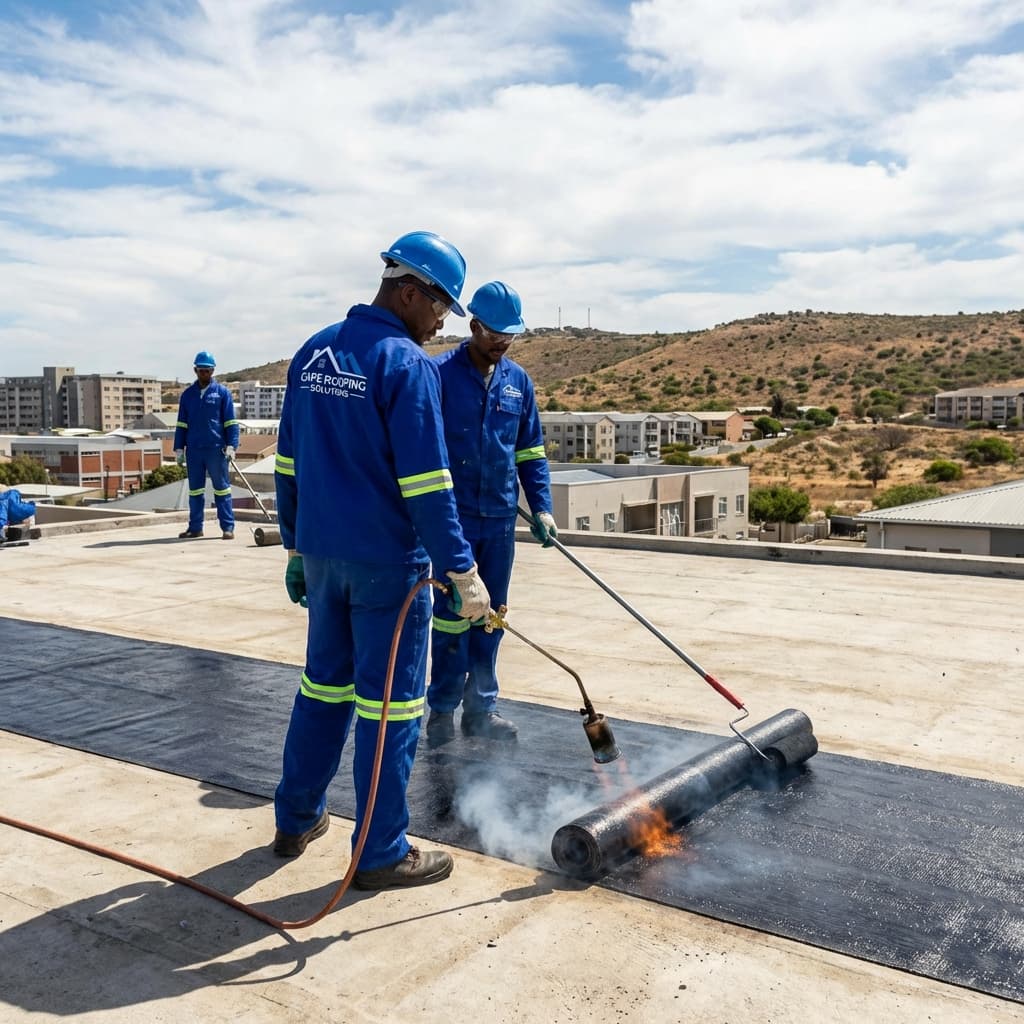
A roof leak is often first noticed somewhere else: a discoloured ceiling, a patch of bubbling paint or a damp smell in a room that normally stays dry. By the time the symptom becomes visible, water may have travelled through several parts of the building. That is why the first sensible step is an assessment of the route of entry, not immediately choosing a waterproofing product.
For Johannesburg and Gauteng properties, weather exposure, roof alterations and the condition of drainage details all deserve attention. However, the five signs below do not prove that the roof is the cause in every case. Plumbing leaks, condensation and defects in finishes can produce similar symptoms. The purpose of this guide is to help you describe what you see, recognise when an area may be unsafe and understand what a useful repair recommendation should explain.
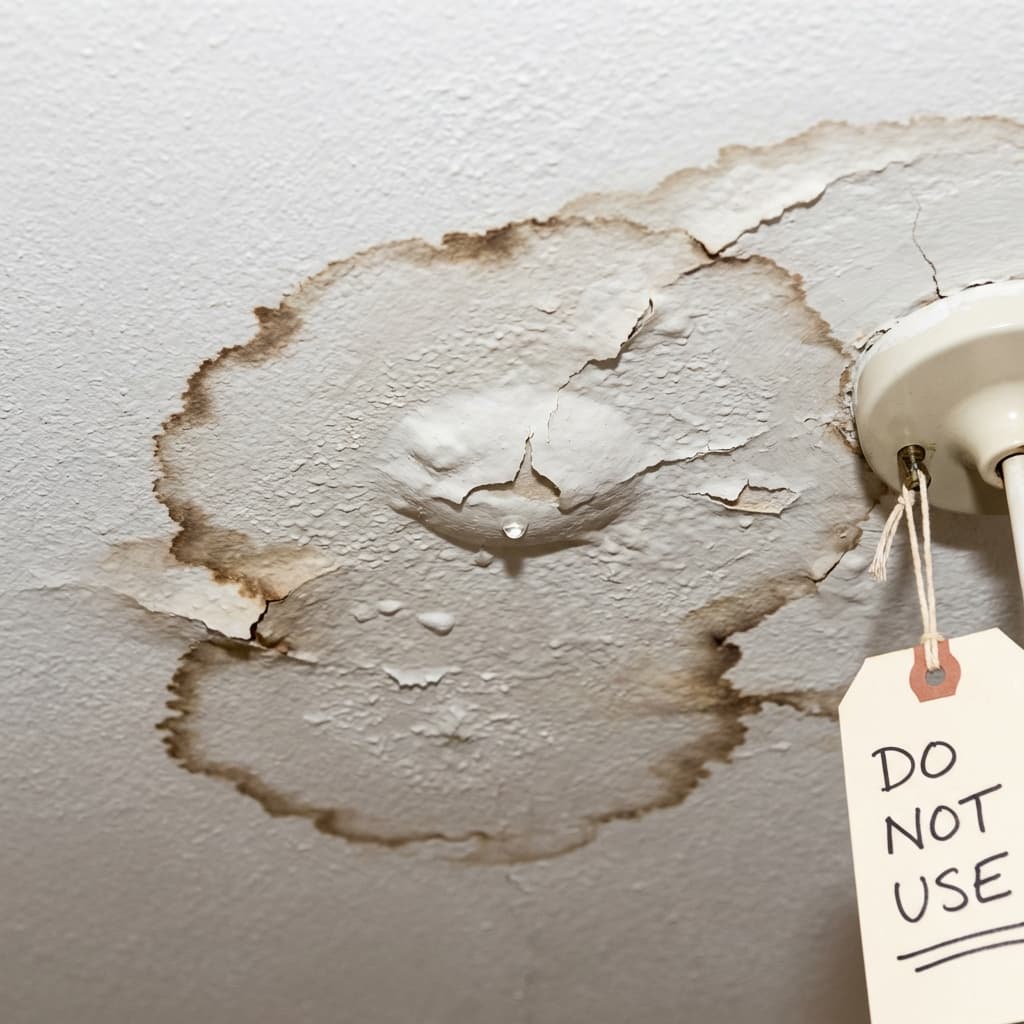
1. Ceiling stains or bubbling paint that return
A brown mark, blistered coating or soft-looking patch on a ceiling is a reason to investigate moisture, particularly when it returns after being painted. Notice when the change occurs. A mark appearing after wind-driven rain may suggest a different route from one that becomes damp whenever a bathroom is used. Those observations help the assessor narrow the investigation, but they do not establish the cause by themselves.
Water can move along framing, services or the underside of a surface before reaching a point where it drips or soaks into the ceiling. The area directly above the stain therefore deserves attention, but should not be treated as the only possible source. Ask whether the assessment includes the adjoining roof details and any relevant plumbing, rather than assuming that a patch directly over the visible mark will resolve the problem.
Do not simply use a stain-blocking primer as the repair. Such a product may be appropriate in the final decorative system once the source is addressed and the surface is suitable. It does not stop water entry or restore a weakened board. If the ceiling is newly sagging, bulging or shedding material, keep clear and arrange urgent professional assistance before thinking about repainting.
2. Damaged or displaced roof coverings
Cracked tiles, missing components, loose sheet edges and visibly disturbed ridge details can leave parts of a roof more vulnerable to weather. Report anything you can observe from a safe position at ground level. Do not climb onto the roof, lean out of a window or enter the roof space to obtain a better photograph. Close inspection should be undertaken using appropriate access and safety arrangements.
A damaged covering needs to be considered in the context of the assembly beneath and around it. The assessor may need to check supporting components, underlay or adjacent details, depending on the roof type and what can safely be accessed. Replacing the most obvious broken tile may be necessary, but it does not establish that every concealed or neighbouring defect has been found.
Consider recent changes as part of the history. Work around aerials, solar equipment, services or another roof penetration may be relevant to a new leak. This does not mean the latest contractor is automatically responsible; it gives the investigation useful context. Keep installation and repair records so the team can compare what changed and avoid relying on uncertain recollections about when the damage started.
3. Deteriorating flashings, junctions and penetrations
Many roofs depend on carefully detailed connections around walls, chimneys, parapets, vents and other interruptions. These junctions need to manage water while accommodating the conditions of the roof system. A loose edge, failed sealant or damaged membrane at a connection may contribute to leakage even when the main covering looks broadly intact from the ground.
A proper assessment should look at how the detail works, not only whether a sealant bead is visible. Ask whether the proposed repair is compatible with the existing materials and whether preparation, attachment and the surrounding surfaces are included. Adding another layer over a poorly understood detail can make a later investigation harder without resolving the original weakness.
Be cautious of a quotation that describes every junction problem as a quick silicone repair. Sealants have useful applications, but product choice and joint design depend on the situation. The contractor should explain the proposed detail and its limitations. If movement or deterioration in the supporting construction is suspected, that issue may need separate professional input before the weatherproofing can be reinstated properly.
4. Persistent ponding or overflowing drainage
Water that remains in an area after rainfall, repeatedly overflowing gutters or an outlet that appears unable to clear deserve investigation. The significance depends on the roof's design and waterproofing system. A brief observation during heavy rain is different from water that remains after the weather has cleared, so the timing and pattern are useful information for the assessor.
Possible causes include obstructions, outlet problems, changes in levels or an arrangement that no longer suits the way water reaches the area. The solution should follow the findings. Clearing a blockage may be appropriate in one case, while another may need drainage or surface work. Increasing an outlet size or redirecting water is not a universal remedy and can have consequences elsewhere in the building.
The assessment should follow the route beyond the roof edge as well. Downpipes, discharge points and surrounding ground levels can influence where water ends up. A roof repair that sends runoff towards a doorway or neighbouring property creates a different problem. Our drainage assessment guide explains why the complete discharge route matters when considering changes.
5. Recurring damp or a persistent musty smell
A room that repeatedly smells damp deserves attention even when the visible stain is small. Moisture can affect concealed material and adjoining finishes, but a smell alone cannot tell you whether the roof, plumbing or condensation is responsible. Record which rooms are affected and whether the problem changes with weather, use of wet areas or ventilation.
Avoid assuming that a dehumidifier or fresh paint has solved the cause simply because the room feels better for a while. These measures may change conditions or appearance without addressing water entry. A useful inspection distinguishes the observed symptoms from the explanation being proposed and makes clear which further checks are needed before a firm repair scope can be established.
Where materials are visibly deteriorated, the assessment should include their condition as well as the source of moisture. Some surfaces may be suitable for preparation and recoating after drying; others may need removal or replacement. The decision should relate to the material and extent of damage. Our broader ceiling damage guide covers the difference between an ordinary finishing issue and signs that need urgent attention.
When the situation needs urgent help
A leaking roof becomes an immediate safety concern when water reaches electrical equipment, a ceiling deforms or material is at risk of falling. Keep people away from the affected area. Do not touch wet lights or switches, enter potentially electrified water or stand below a bulging ceiling to inspect it. If there is suspected collapse, injury, fire or another immediate danger, contact the appropriate emergency service.
Do not climb onto a roof during or after a storm to apply a temporary patch. Wet surfaces, loose components and fragile materials can create hazards that are difficult to judge from below. Equally, do not puncture a ceiling to drain collected water or improvise supports. These actions can trigger a release of water and debris or expose other hazards.
A website enquiry is not an emergency response service. Once immediate risks have been addressed, a repair contractor can discuss investigation and reinstatement. Be clear when calling about whether the area has already been made safe and whether electricity or water has been professionally isolated. That information helps the next provider understand the boundaries of the work still required.
What a useful roof assessment should deliver
An assessment should establish more than a product recommendation. Ask for a description of the roof type, the areas examined, the observations and the likely route of water entry. Photographs tied to specific locations make the findings easier to understand. The report should also explain inaccessible areas or other limitations rather than implying that every concealed component has been checked.
Separate confirmed defects from possible causes. A damaged flashing may be visible and clearly require repair, while the full explanation for an internal stain may still need investigation. This distinction matters when you authorise work: you should know whether the contractor is offering a defined source repair, an investigative step or a broader refurbishment based on the condition of the roof.
The findings should lead to an appropriate scope. Some roofs may suit targeted repairs; others may need more extensive work. Neither approach is automatically better. Our roof inspection scope guide explains what to request so you can compare recommendations and understand why a contractor believes a particular repair is justified.
Ask how the proposed repair will be checked before the job is closed. A dry-weather inspection can identify visible defects but may not reproduce the conditions under which a leak appears. Any controlled water test should be selected and managed by the responsible provider, with protection for the building and occupants; it is not a task for the owner to improvise. Where subsequent rainfall is needed to assess performance, agree what observations to record and how to report recurrence. The completion record should distinguish checks already carried out from performance that has not yet been observed.
Compare the complete waterproofing scope
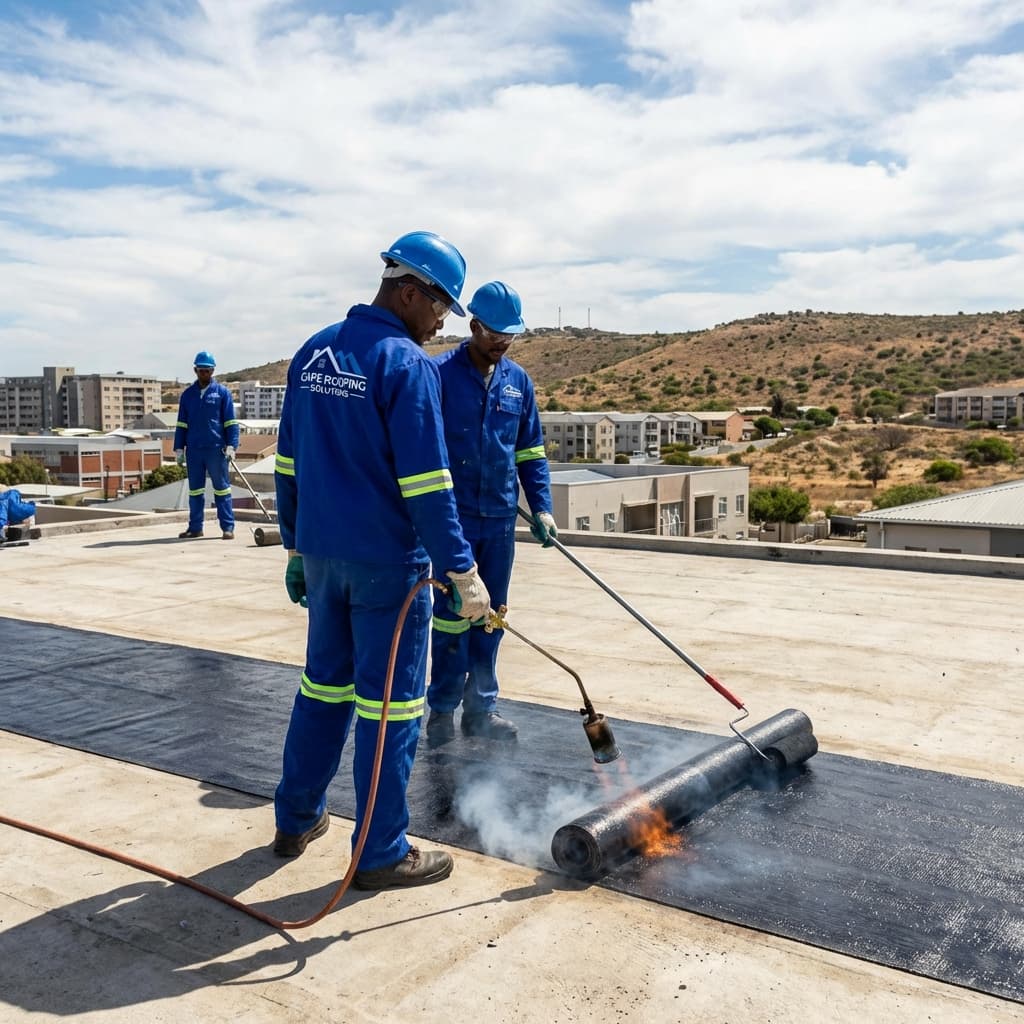
Two quotations can use the same product name while including very different preparation and detailing. Ask whether existing failed material will be removed where necessary, how the substrate will be prepared and which joints, edges and penetrations are included. Access equipment, protection of occupants, waste removal and making good should also be clear.
For example, imagine a flat-roof area with an old coating, blocked drainage and damp inside the room below. A price for applying another coating is not directly comparable with a scope that investigates the drainage, repairs damaged details and prepares the underlying surface. This is a hypothetical comparison, not a claim about a specific project. It illustrates why the lowest total cannot be judged without understanding the work included.
Agree how concealed defects and changes will be handled. If opening an area reveals additional damage, the contractor should document it and explain the proposed response. Product application requirements, weather limitations and curing or drying periods should be reflected in the programme. A rush to cover the roof before the next rain should not become a reason to ignore the conditions required by the chosen system.
Plan internal repairs after the source is addressed
Once the source is repaired, the ceiling, plaster and paint may still need attention. These are related but separate work items. The contractor should explain which material can remain, which requires replacement and how readiness for finishing will be assessed. A surface that looks dry is not necessarily ready for every coating or adhesive.
Include the intended decorative result in the scope. A small local patch may remain visible because of texture, colour or sheen differences. Repainting a complete wall or ceiling can sometimes be the more consistent option, but the appropriate extent should be agreed rather than assumed. Our interior painting services can be discussed after moisture and substrate issues have been resolved.
If you intend to make an insurance claim, contact your insurer about reporting, evidence and authorisation requirements. Keep photographs taken safely, repair reports and invoices. A contractor can describe damage and quote for work, but cannot guarantee cover or the insurer's decision. The repair plan and the claim process should be coordinated without delaying essential measures needed to protect people.
Keep records and arrange suitable follow-up
Save the inspection findings, accepted scope, product information and completion photographs. These records are useful if a symptom returns or another contractor later works on the roof. They help distinguish the original repair area from unrelated subsequent damage and provide a better starting point than a general statement that the roof was waterproofed some years ago.
Follow the relevant maintenance and warranty requirements, and ask the contractor to recommend checks appropriate to the roof's condition. There is no single inspection interval that suits every system or property. Drainage obstructions, new roof work and adverse weather may justify bringing a review forward. Ground-level observations can help you notice changes, but they do not replace safe professional access where close inspection is needed.
For a Johannesburg or Gauteng property, see Construction Joburg's roof repair and waterproofing services or request a roof assessment. Share your suburb, safe-to-take photographs, the timing of the symptoms and any previous repair history. A clear description gives the assessment a useful starting point and helps the resulting quotation focus on the cause as well as the visible damage.